Reading the cold patch on your radiator
With the heating on and running for twenty minutes or so, run your hand carefully over the radiator from top to bottom and side to side. The shape of the cold area is the first clue, and it is worth noting before you touch anything.
- Warm at the bottom, cold at the top: air or gas has collected in the top of the panel and the water cannot reach it. Bleeding usually fixes this.
- Warm at the top, cold at the bottom or in the middle: sludge (black iron oxide, also called magnetite) has settled along the bottom and is blocking the flow.
- Cold all over while others are hot: a closed or stuck valve, a TRV pin jammed down, or a system that is out of balance.
- Several radiators cold, often upstairs: low pressure on a sealed system, a feed tank problem on an older open-vented system, or a pump that is struggling.
If the radiator is lukewarm near the valves and cold at the far end, that often means too little water is getting through rather than a blockage, which points you towards balancing. Note which radiators misbehave and when, as a pattern tells a plumber far more than "the heating is not working".
Cold at the top: bleeding out the air
Air gets into a heating system when it is drained down, when new radiators are fitted, or slowly through small leaks and the feed tank. Bleeding lets it out. You need a radiator key (a few are sold at any hardware shop), a cloth and a small tray or cup.
- Turn the heating off and let the radiators cool. Hot water under pressure can spray and scald.
- Find the bleed screw, a small square spindle at one top corner of the radiator.
- Hold the cloth under it, fit the key and turn anticlockwise about a quarter of a turn. You should hear a hiss as air escapes.
- When water starts to dribble out steadily, close the screw firmly but do not overtighten it.
- Do the same on any other radiator with a cold top, starting downstairs and working up.
On a combi or other sealed system, bleeding lets water out, so check the boiler pressure gauge straight afterwards (see below). On an older open-vented system with a tank in the loft, the tank refills the system on its own.
If one radiator needs bleeding every week or two, the air is coming from somewhere. It can be a tiny weep at a joint, a pump drawing air in, or gas produced by corrosion inside the system. Gas that smells slightly or burns if lit is hydrogen from rusting steel, and it is a sign the water needs treating rather than bleeding over and over.
Cold at the bottom: sludge and magnetite
Steel radiators and iron parts slowly rust from the inside. The rust forms a fine black sludge that sinks to the bottom of the panels and gathers in the lowest pipes. As it builds up, the bottom of the radiator stays cold while the top still warms, and the heat output falls. If you bleed a radiator like this and the water comes out black or dark grey, sludge is the likely cause.
Sludge does not stay put. It is carried round to the pump, the boiler heat exchanger and the valves, which is why a sludged system often comes with a noisy boiler, a pump that sticks, or radiators that go cold one after another.
What you can and cannot do yourself
For a single radiator, some confident homeowners take it off the wall and flush it out with a hose outside. It is heavy and messy, and needs the valves closed, the system partly drained and the joints remade without leaks, so many people prefer to leave it to a plumber. There is no chemical you can pour in that clears heavy sludge from a whole system on its own.
When several radiators are cold at the bottom, the whole system needs cleaning. That is usually done with a power flush, followed by fresh inhibitor to slow corrosion and, ideally, a magnetic filter on the return pipe to catch sludge before it reaches the boiler.
Cold all over: stuck TRV pins and closed valves
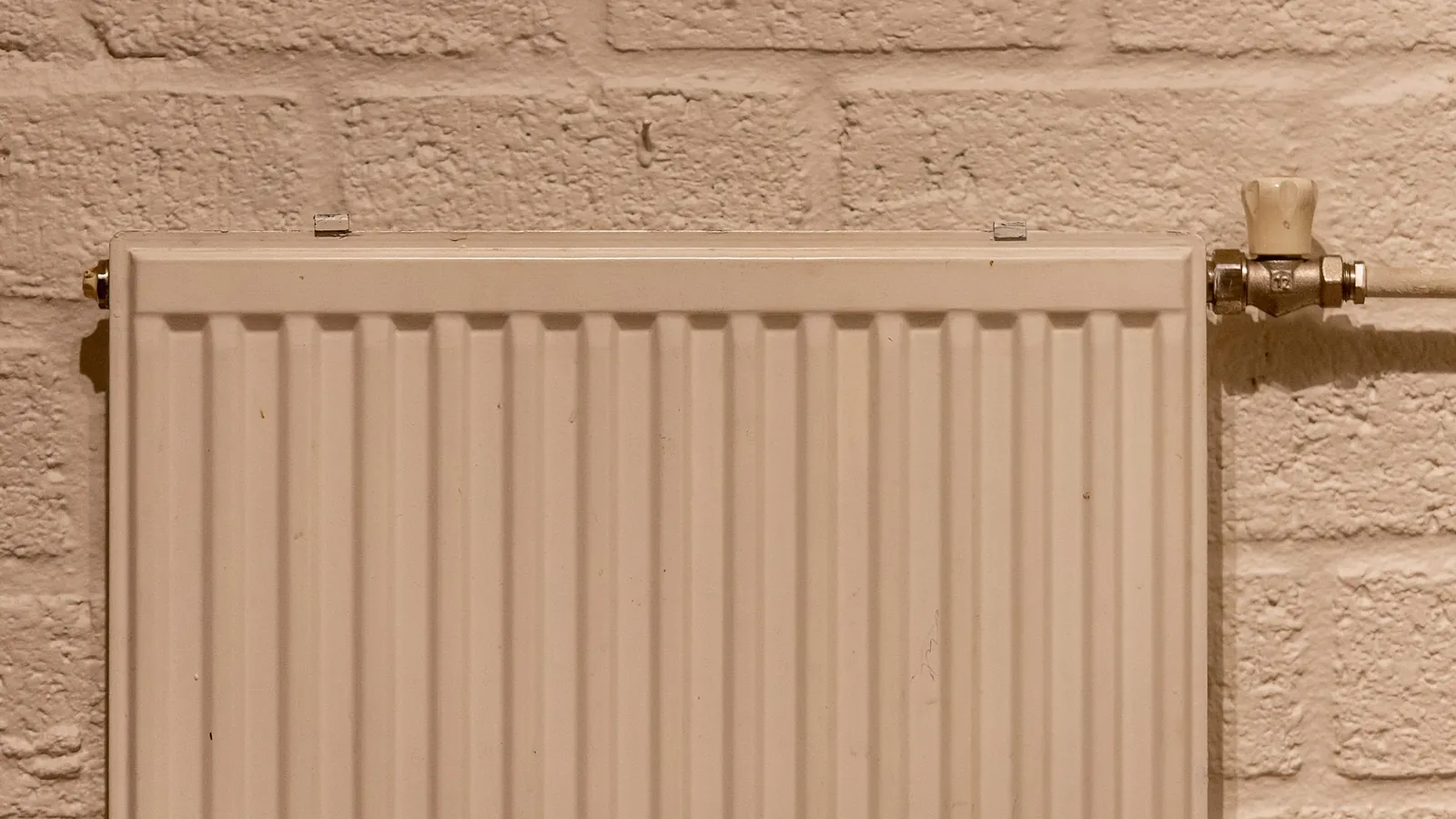
A radiator that is stone cold while the rest of the house is warm usually is not getting any flow at all. Check the two valves first. One end normally has a thermostatic radiator valve (TRV), the numbered head, and the other a lockshield under a plastic cap. If either is fully closed, nothing gets through.
Freeing a stuck TRV pin
TRVs are the most common cause after summer. When a valve sits closed for months, the small pin underneath the head can stick in the down position.
- Turn the TRV to its highest setting, then remove the head. Most unscrew by hand or have a release collar or clip.
- You will see a small metal pin. It should be sticking up and spring back when pressed.
- If it is stuck down, tap it gently or grip it with pliers and wiggle it up and down a few times until it moves freely.
- Refit the head and see if the radiator warms up over the next few minutes.
Do not force the pin or pull hard, as a broken pin or a leaking gland means draining down to replace the valve body. If the pin moves but the radiator still stays cold, or the valve weeps around the spindle, the valve may need replacing. Older, heavily corroded radiators that leak from the seams or the tapping points are better replaced than patched; our page on radiator repair and replacement covers what that job involves.
Balancing the system with the lockshield valves
Hot water takes the easiest route. Radiators near the boiler get plenty of flow and heat up fast, while those at the end of the run get what is left. If the nearest rooms are roasting and the far ones never get properly warm, the system needs balancing. This is common after new radiators are added or a kitchen extension is built onto an interwar semi without anyone adjusting the rest of the system.
- With the heating off and cool, open every TRV and every lockshield fully.
- Turn the heating on and note the order in which the radiators get warm. The first ones are nearest the boiler in terms of pipe run.
- On the quickest radiator, close the lockshield down fully with a spanner or the cap, then open it only a quarter to half a turn.
- Work along the list, opening each lockshield a little more than the last. The slowest radiators stay fully open.
- If you have a clip-on or infrared thermometer, aim for a similar temperature difference between the flow and return pipes on each radiator.
It takes patience and sometimes two or three rounds of small adjustments. Count your turns on each lockshield so you can undo them. If balancing does not help, the cause is more likely a weak pump, sludge in the pipes or pipework that is too small for the radiators on it.
One cold radiator upstairs: pressure, pump or header tank
When the upstairs radiators go cold first, the water is not being pushed high enough round the system. What to check depends on the type of system you have.
Combi and other sealed systems
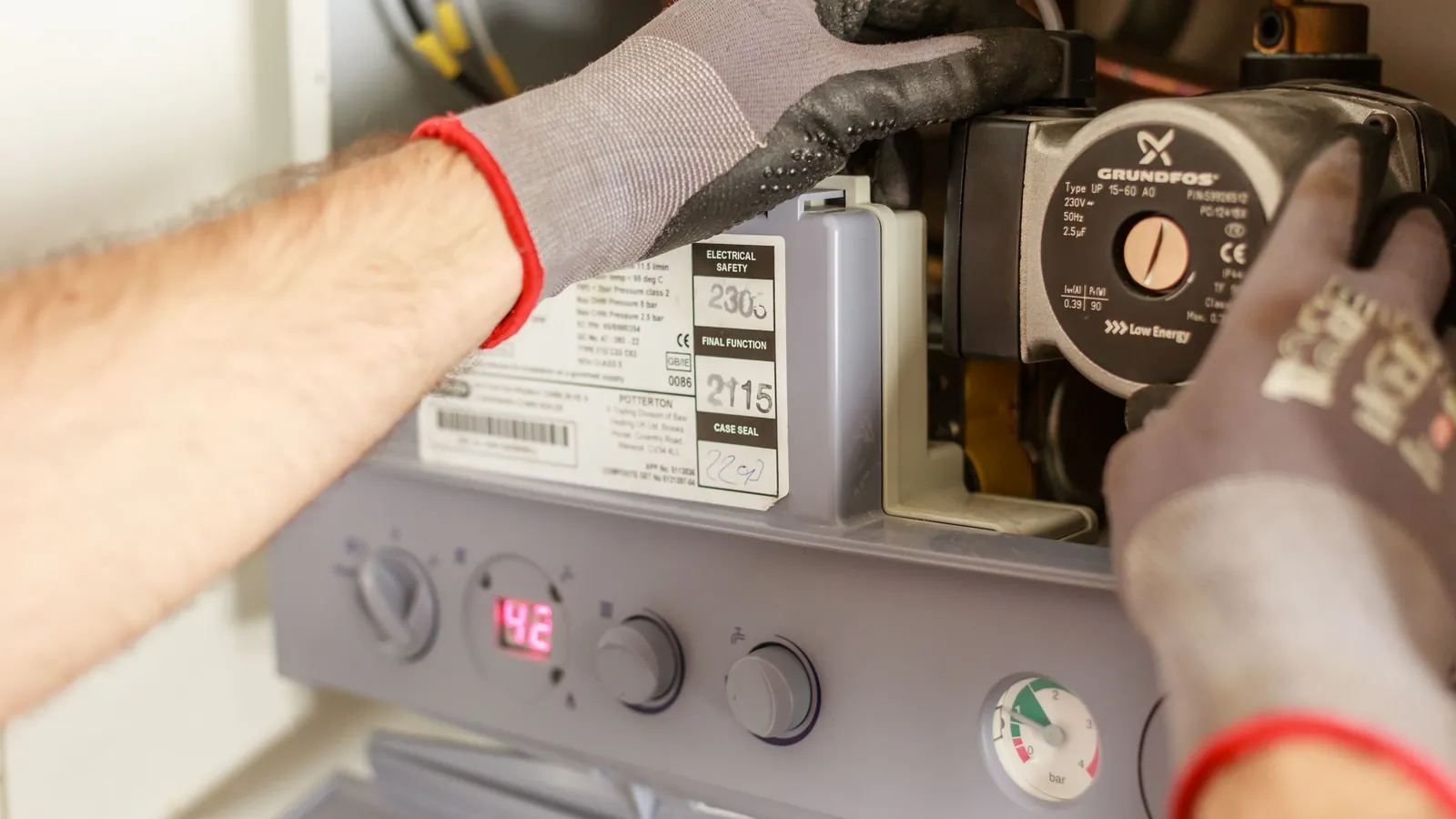
Look at the pressure gauge on the boiler or under it. Most boilers want around 1 to 1.5 bar when the system is cold, but your manual gives the right figure. If it is below that, top it up through the filling loop: a short braided hose or built-in lever with two small valves, usually under the boiler. With the heating off, open the valves slowly, watch the gauge rise, close them both when it reaches the right level, and disconnect the hose if yours has one. If the pressure keeps dropping over days, there is a leak or a failing expansion vessel or pressure relief valve, and that needs a plumber.
Older open-vented systems
Many Victorian terraces in Harborne and Moseley still have a small feed and expansion tank in the loft. If its ball valve sticks or the tank runs low, air gets drawn in and the highest radiators suffer first. Check the tank has water in it and that the float moves freely.
The pump
A pump that hums but feels cold, rattles, or has been set to its lowest speed may not lift water to the top floor. Pumps can stick with sludge. Replacing or unseizing one means isolating the system, so leave that to a plumber. If you ever smell gas near the boiler, do not use switches, open windows, leave the property and ring the National Gas Emergency number on 0800 111 999.
If the checks above have not sorted it, the next step is a visit. The page on power flushing linked above explains how that works. The form below gets you a written price.
Quick Quote Online