Is it one fitting or the whole drain?
The first question is where the blockage sits, because that decides everything else. Run water in each sink, bath, shower and toilet in turn and watch what happens.
Signs of a local blockage
- Only one fitting is slow or holding water, and everything else drains normally.
- The problem started gradually, often with hair, food or soap build-up.
- There is no smell or water outside.
Signs of a drain blockage
- Several fittings are slow at once, especially those on the ground floor.
- Toilets rise when flushed, or the bath gurgles when the washing machine empties.
- The outside gully is overflowing, or the manhole cover has water just below it.
- There is a sewage smell outside or under the floor.
A local blockage is normally within reach of a plunger or a trap, and many people clear it themselves. A drain blockage lies further down, below ground, and water will keep coming back up whatever you do inside. In that case, stop using water, especially toilets and washing machines, until the drain is cleared. Each flush adds to what is backing up.
Safe first steps for a slow sink or bath
Most kitchen and bathroom blockages are close to the plughole. Start with the gentle options and move on only if they fail.
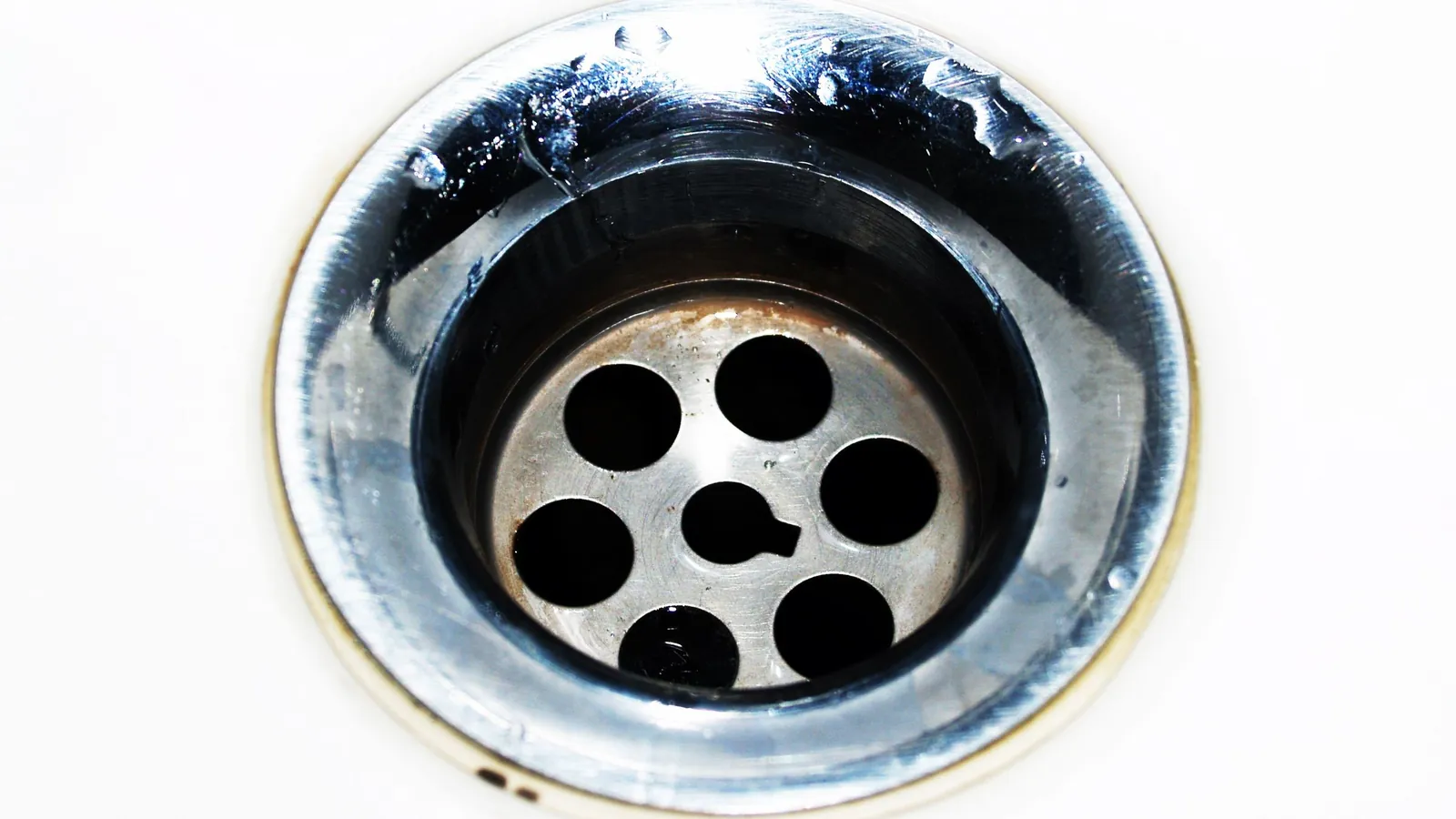
- Clear the plughole. Remove the plug or strainer and pull out anything you can see. In showers and baths, hair wraps round the crosspiece under the grate. A cheap plastic hair grabber or a bent wire hooks it out.
- Use a plunger properly. Put a damp cloth firmly over the overflow hole first, otherwise the pressure just escapes through it. On a double sink, block the other bowl. Leave a little water in the sink to cover the plunger cup and give it ten or so firm pumps.
- Hot, not boiling, water. Very hot tap water or a kettle left to cool for a few minutes helps melt soap and grease. Boiling water can soften plastic waste pipes and push joints apart, and it can crack a ceramic sink or toilet pan.
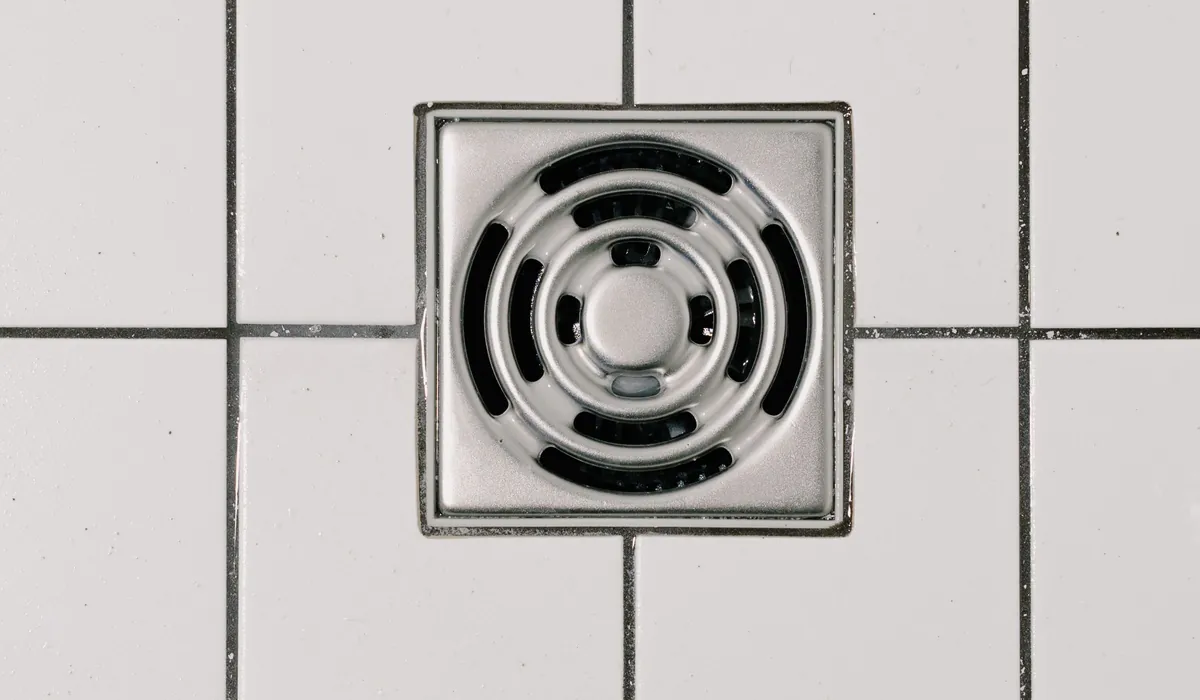
Shower wastes with a low profile trap often have a removable cup or dip tube under the grate. Lift it out and clean it, as the hair and soap sludge there is usually the entire blockage. Put it back in the right way round, or drain smells will come up into the room.
Cleaning the trap under the sink
If the plunger does not shift it, the next step is the trap, the U-bend or bottle-shaped fitting directly under the sink. It holds water to stop drain smells coming up, and it is also where grease, food and hair collect.
- Put a bowl or bucket underneath and have old towels ready. The trap is full of dirty water.
- Unscrew the large plastic nuts by hand. A bottle trap usually has a single base that unscrews. Avoid using a wrench on plastic unless the nut is stuck, and then only gently.
- Empty the trap into the bowl and clean it out with an old brush. Check the short pipe going into the wall too, as the blockage is sometimes just beyond the trap.
- Refit it with the rubber washers seated correctly, tighten by hand, then run water and check for drips.
If the sink still does not drain with a clean trap, the blockage is further along the waste pipe or in the drain outside. Pushing a length of wire or a hired rod into a pipe you cannot see is where things tend to go wrong: it can punch through old joints, get stuck, or compact the blockage harder. That is usually the point to stop.
What not to do with a blocked drain
Some of the most common fixes for a blockage cause harm, either to you or to the pipes.
- Do not mix drain cleaners. Different products can react together and give off toxic gas or heat. Never follow one with another, and never mix them with bleach.
- Do not pour caustic cleaner onto standing water. If the sink is full and not draining, the chemical sits there. It can splash back when you plunge, and whoever opens the trap next gets a face full of it. If you have already used a chemical, tell the plumber before they start.
- Do not rod blindly. Rodding a pipe when you do not know its route or condition can break old clay joints or damage plastic.
- Do not lift heavy covers alone. Cast iron manhole covers are heavy, can trap fingers and may be rusted in. An open chamber is also a serious fall hazard for children and pets.
- Do not keep flushing. If a toilet is rising, flushing again can flood the bathroom.
Outside, clearing leaves and silt from the gully grate is fine. Wear rubber gloves, lift the grate, scoop out what you can reach and put it in a bag rather than back down the drain. If the water level in the gully does not drop once the grate is clear, the blockage is further down.
Fats, wipes and the usual causes
Most blocked drains we see come down to a few things going down the pipe that should not.
Cooking fat and oil
Fat pours as a liquid but sets as it cools in the pipe, coating the inside and catching food scraps. Over months it builds into a hard layer. Let fat cool in the pan, wipe it out with kitchen roll and put it in the bin.
Wet wipes and sanitary products
Wipes labelled flushable do not break down like toilet paper. They snag on joints and roots and bind together with fat. Only paper, pee and poo should go down the toilet.
Leaves, silt and roots
Outside gullies fill with leaves each autumn, and roots from trees and hedges find their way into cracked clay pipes. Older houses around Moseley and Kings Heath often still have their original clay drains with mortar joints, which roots and ground movement can open up over time.
Hair and soap
Bathroom wastes block with hair bound together by soap. A hair catcher on the shower and bath costs little and saves most of these call-outs. Soft Birmingham water means soap tends to lather more, and the sticky soap scum can build up in shower traps faster than people expect.
Who is responsible for which pipes
Responsibility for drains is often misunderstood. Since the private sewer transfer, the rules in England are generally as follows.
- Your responsibility: the pipes that serve only your property and sit within your property boundary. That covers the wastes inside, the soil stack and the drains running to the edge of your land.
- The sewerage company's responsibility: pipes that serve more than one property (these are sewers, even when they run through your garden), and the lateral drain serving your home once it passes beyond your boundary.
In Birmingham the sewerage company is Severn Trent. If your terrace shares a run that backs up in more than one house, or the blockage is in a manhole used by several properties, it is worth contacting them before paying for the work yourself. Leaseholders in flats, including the tower blocks in Nechells and Newtown with their shared stacks, should report problems to the managing agent or council first.
If the problem is in your part, a drain unblocking visit normally starts with lifting the inspection chambers to find where the water stops. Hand rods clear many blockages. High pressure water jetting scours fat and silt off the pipe walls. A CCTV survey sends a camera down the drain to show roots, cracks or collapsed sections, and gives a written record you can use with a landlord, buyer or insurer. If a hidden leak is suspected rather than a blockage, leak detection is a separate job.
If the checks above have not sorted it, the next step is a visit. The page on drain unblocking linked above explains how that works. The form below gets you a written price.
Quick Quote Online