What the law requires of landlords
The Gas Safety (Installation and Use) Regulations place three main duties on landlords who let residential property with gas appliances, pipework or flues that they provide.
- Maintain the gas pipework, appliances and flues in a safe condition.
- Check each appliance and flue for safety at least every 12 months.
- Record the check and give a copy to your tenants.
The written record is the Landlord Gas Safety Record. Many people still call it a CP12, a name that comes from the old CORGI form, and you will often see it called a gas safety certificate. Whatever the name, it must show the date of the check, the property address, your name and address (or your agent's), the engineer's name, signature and Gas Safe registration number, each appliance or flue checked, any defects found and what was done about them.
The check must be done by an engineer on the Gas Safe Register, which is a legal requirement for all gas work in the UK. Ask to see their ID card, check that it is in date and covers the type of appliance, and look them up on the register if you are unsure. The regulations cover most residential lets, including rooms in shared houses, holiday lets and properties let through an agent.
Deadlines, copies for tenants and keeping records
The timings are specific, and they are where landlords most often slip up.
- Every 12 months. Each appliance must be checked within 12 months of the previous check.
- Existing tenants must be given a copy of the record within 28 days of the check.
- New tenants must be given a copy before they move in.
- Keep each record for at least two years. Many landlords keep them for the whole tenancy and longer, as they show a history of the property.
Keeping the same anniversary date
You can have the check done up to two months before the deadline and still keep the original anniversary date. So if your deadline falls at the end of one month, a check carried out any time in the two months before it can be recorded as if done on the deadline, and next year's check is due on the same date. This stops the date creeping earlier each year when you book in good time. Checks done earlier than that window reset the date.
Where the property is let for short stays under 28 days, such as a holiday let, a copy of the record can be displayed prominently in the property instead of being handed to each guest. In a shared house the record can also be displayed, but make sure every tenant can see it.
What the engineer checks on the day
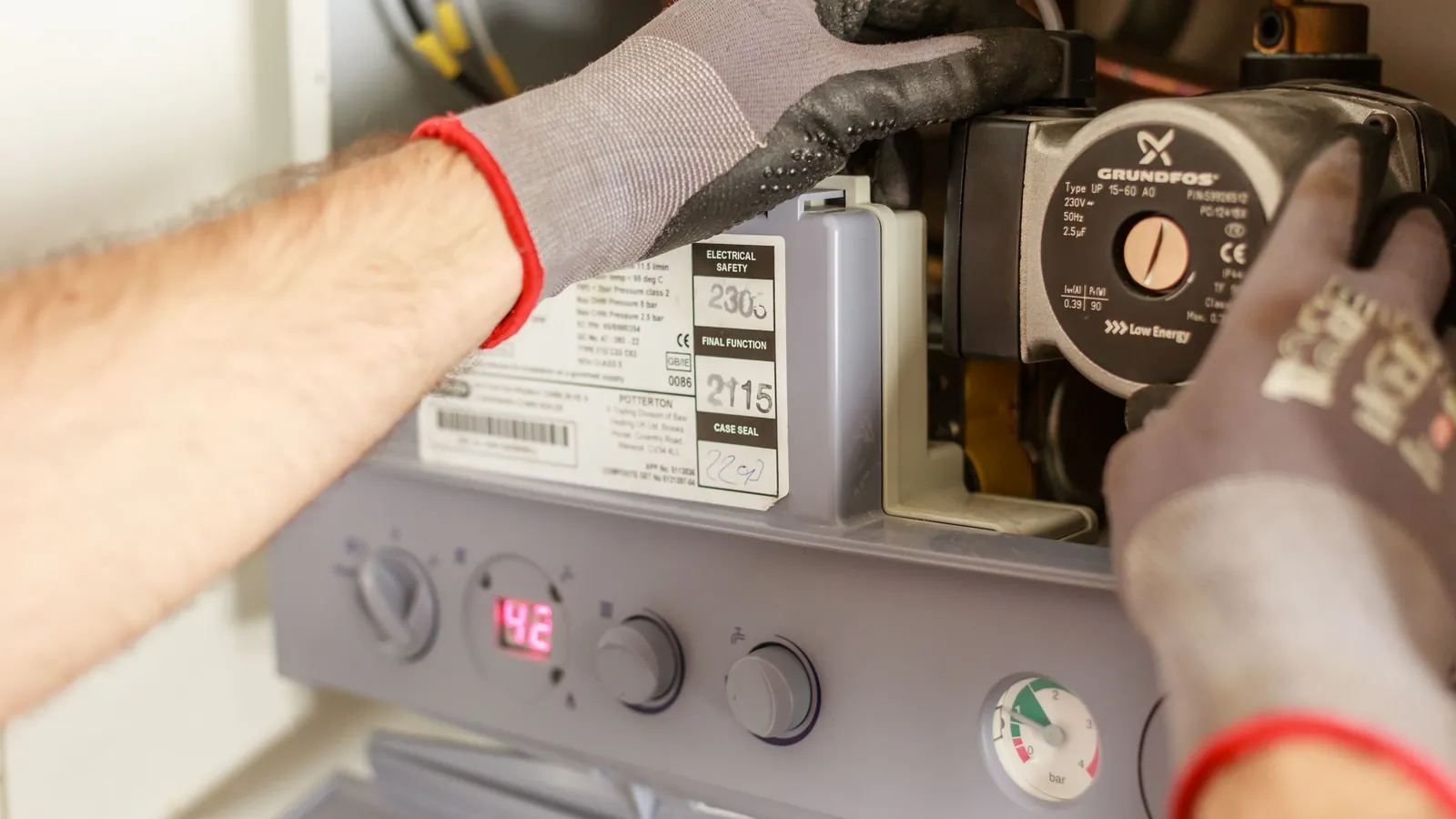
A gas safety check is not the same as a full boiler service, although many landlords book both at once. The check looks at whether each appliance, the pipework and the flues are safe to use. On a typical visit the engineer will:
- Carry out a tightness test at the meter to check the whole installation holds gas without leaking.
- Check the burner pressure or gas rate on each appliance against the maker's figures, to confirm it is burning the right amount of gas.
- Test flue flow and spillage, making sure fumes go up and out of the flue and do not spill back into the room, especially on open-flued appliances like older gas fires and back boilers.
- Check ventilation, since some appliances need a permanent air vent to burn safely, and vents are often blocked or painted over by tenants.
- Test safety devices such as flame failure devices on hobs and fires, and boiler shut-off controls.
- Inspect the flue for damage, correct support, proper joints and a clear terminal outside.
Victorian terraces in Harborne, Moseley and Kings Heath sometimes still have gas fires into old brick chimneys. Those flues need particular care, since a partly blocked or cracked chimney can let fumes into the room or next door. Tell the engineer about every gas appliance in the property, including any in outbuildings or cellars.
What happens if an appliance is unsafe
If the engineer finds a problem, they record it on the gas safety record and classify it using the industry procedure for unsafe situations.
Immediately Dangerous
The appliance or installation is an active danger to life or property. The engineer will explain the risk and, with the permission of the owner or responsible person, disconnect it from the gas supply and attach a warning notice and label. If permission is refused, they must report it to the gas emergency service, who can disconnect the supply.
At Risk
There are one or more faults that could become dangerous in the future. With permission, the appliance is turned off and labelled until it is repaired. It should not be used again until the fault is fixed.
Some items are recorded as not meeting current standards, which means the appliance is not a danger but falls short of present-day rules. These are advice to act on, not a failure.
As the landlord, you are responsible for getting unsafe appliances repaired or replaced and a fresh check done once the work is complete. Keep the tenants informed and, if heating or hot water will be off for a while, arrange temporary heaters or hot water. If anyone ever smells gas, they should turn off the gas at the meter if safe to do so, avoid switches and flames, open doors and windows, leave the property and call the National Gas Emergency number on 0800 111 999.
Tenant appliances, HMOs and letting agents
Landlord versus tenant appliances
Your duty covers the appliances and flues you provide. If a tenant brings their own gas cooker or fire, you do not have to check that appliance, but you remain responsible for the pipework to it and for any flue you provide. It is sensible to include a clause in the tenancy about tenants' own appliances, and to ask the engineer to note them on the record.
HMOs and shared houses
In houses in multiple occupation, such as the student lets that fill streets in Selly Oak, the same duties apply to every gas appliance in the building, including the boiler serving all the rooms. HMOs often have extra licensing conditions from the council, which may ask to see current gas safety records when you apply or renew.
Using a letting agent
You can hand the job of arranging checks to a managing agent through your management contract. The contract should make clear who books the check, who keeps the records and who gives copies to tenants. Even so, the legal duty stays with you as the landlord. If the agent lets a check lapse, you are still the one responsible, so ask for a copy of each record and keep your own diary of due dates.
Access, CO alarms and keeping a paper trail
Tenants usually want the check done, but access can be difficult with busy households, shift workers or students away for the holidays.
When a tenant will not give access
The law expects you to take all reasonable steps to get the check done. Write to the tenant giving notice and a suggested time, offer alternatives, and follow up in writing if the appointment is missed. Keep a record of every letter, email, text and missed visit. If the check cannot be done despite repeated reasonable attempts, that record shows what you did. Do not force entry, and do not let the gas safety record lapse without a clear paper trail.
Carbon monoxide alarms
In rented homes in England, landlords must fit a carbon monoxide alarm in any room used as living accommodation that has a fixed combustion appliance, such as a boiler, gas fire or wood burner. Gas cookers are the exception. Alarms must be repaired or replaced once a tenant reports a fault. Smoke alarms are also required on every storey used as living space. Test the alarms at the start of each tenancy, and ask the engineer to confirm they are present and working during the gas check.
If you let several properties, a simple spreadsheet listing each address, the date of the last check and the next due date saves a lot of stress. If you would like the boiler looked after at the same visit, a boiler service can be booked alongside the landlord gas safety check.
If the checks above have not sorted it, the next step is a visit. The page on gas safety certificate for landlords linked above explains how that works. The form below gets you a written price.
Quick Quote Online